US inequality:
Global Inequality:
Park Avenue: money, power and the American dream - Why Poverty?:
The rise of plutocracy:
What happens in society with inequality?:
From above TED talk:


Australian data:
TED talk: Diminishing middle class = slow economy:
Nobel Economics Nobel Laureate Jospeh Stiglitz: Price of Inequality::
TED talk: How inequality harms societies:
The rise of plutocracy:
What happens in society with inequality?:
From above TED talk:
Australian data:
ttp://www.smh.com.au/federal-politics/political-news/countrys-rich-have-lions-share-of-income-growth-20131009-2v8q2.html:


Australian Productivity Comission - Income Distribution:
CEO Pay Ratio to average worker in their company:
Example: IBM

http://www.abc.net.au/news/2017-12-06/ceo-salaries-78-times-average-australian/9216156

Furthermore over the past couple of years, CEO remuneration has climbed 46 per cent more, year on year, than average Australian incomes.


"Behind every great fortune lies a great crime" - Honoré de Balzac
Update 13/12/2013:
Now even the Pope (now person of the Year) is calling for end on inequality. He attacked the "widening gap between those who have more and those who must be content with the crumbs", calling on governments to implement "effective policies" to guarantee people's fundamental rights, including access to capital, services, educational resources, healthcare and technology.
Update 22/1/2014:
Oxfam published "Working For The Few" reporting:
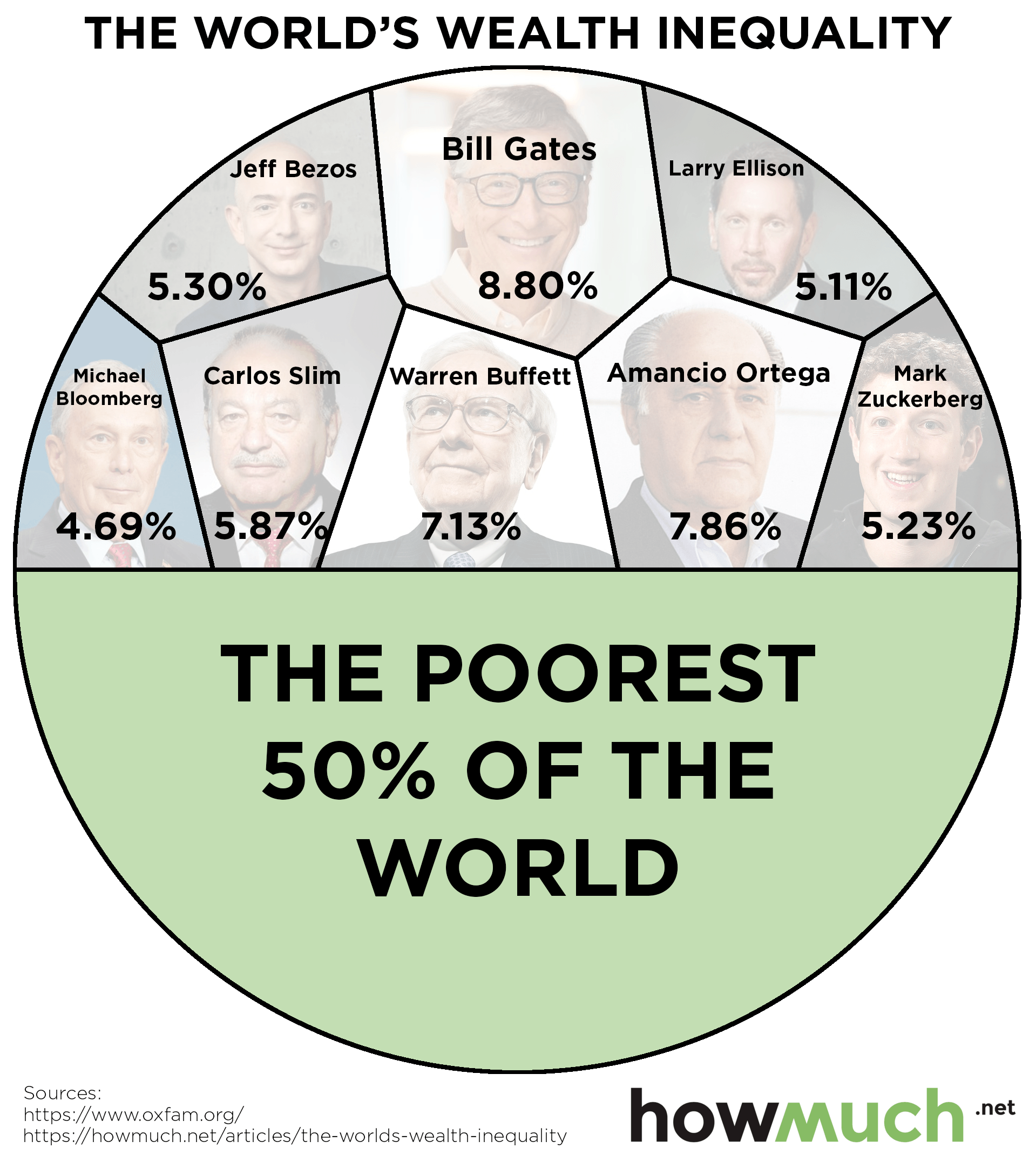
- The 85 richest people in the world own more wealth than the poorest 3.5 billion
- The wealth of the one percent richest people in the world amounts to $110 trillion. That’s 65 times the total wealth of the bottom half of the world’s population.
- Not dodge taxes in their own countries or in countries where they invest and operate, by using tax havens;
- Not use their economic wealth to seek political favors that undermine the democratic will of their fellow citizens;
- Make public all the investments in companies and trusts for which they are the ultimate beneficial owners;
- Support progressive taxation on wealth and income;
- Challenge governments to use their tax revenue to provide universal healthcare, education and social protection for citizens;
- Demand a living wage in all the companies they own or control;
- Challenge other economic elites to join them in these pledges.
https://publications.credit-suisse.com/tasks/render/file/?fileID=BCDB1364-A105-0560-1332EC9100FF5C83
Update 12/8/2014:

Update 20/1/2015: Oxfam report - WEALTH: HAVING IT ALL AND WANTING MORE
http://oxfamilibrary.
Update 25/4/2015: US Senate cook struggling to get off food stamps
http://www.theguardian.com/commentisfree/2015/apr/22/i-am-a-cook-in-the-us-senate-but-i-still-need-food-stamps-to-feed-my-children
I want the presidential hopefuls to know that I live in poverty. Many senators canvass the country giving speeches about creating “opportunity” for workers and helping our kids achieve the “American dream” – most don’t seem to notice or care that workers in their own building are struggling to survive.
I’m a single father and I only make $12 an hour; I had to take a second job at a grocery store to make ends meet. But even though I work seven days a week – putting in 70 hours between my two jobs – I can’t manage to pay the rent, buy school supplies for my kids or even put food on the table. I hate to admit it, but I have to use food stamps so that my kids don’t go to bed hungry.
Update 31/5/2015: Ted Talk - Paul Tudor Jones II: We need to rethink Capitalism
http://www.ted.com/talks/paul_tudor_jones_ii_why_we_need_to_rethink_capitalism
Billionaire hedge fund manager Paul Tudor Jones ruffled more than a few feathers when he warned first that "we're in the middle of a disastrous market mania,"and second he explained that "this gap between the 1 percent and the rest of America, and between the US and the rest of the world, cannot and will not persist," concluding that "historically, these kinds of gaps get closed in one of three ways: by revolution, higher taxes or wars.None are on my bucket list." His thesis is simple and profound as the following full speech shows...

Update 14/11/2015: Global Wealth Pyramid

Update 19/1/2016: Oxfam report - AN ECONOMY FOR THE 1%:


8 Billionaires Own as Much as 3.6 Billion People:
http://policy-practice.oxfam.org.uk/publications/an-economy-for-the-99-its-time-to-build-a-human-economy-that-benefits-everyone-620170
Causes of inequality:
http://policy-practice.oxfam.org.uk/publications/an-economy-for-the-99-its-time-to-build-a-human-economy-that-benefits-everyone-620170
Causes of inequality:
- Corporations, working for those at the top
- Squeezing workers and producers
- Dodging tax
- Super-charged shareholder capitalism
- Crony capitalism
- Avoiding tax, buying politics
Update 22/1/2018: Oxfam report - Richest 1 percent bagged 82 percent of wealth created last year - poorest half of humanity got nothing:
Eighty two percent of the wealth generated last year went to the richest one percent of the global population, while the 3.7 billion people who make up the poorest half of the world saw no increase in their wealth, according to a new Oxfam report released today.
‘Reward Work, Not Wealth’ reveals how the global economy enables a wealthy elite to accumulate vast fortunes while hundreds of millions of people are struggling to survive on poverty pay.
- Billionaire wealth has risen by an annual average of 13 percent since 2010 – six times faster than the wages of ordinary workers, which have risen by a yearly average of just 2 percent. The number of billionaires rose at an unprecedented rate of one every two days between March 2016 and March 2017.
- It takes just four days for a CEO from one of the top five global fashion brands to earn what a Bangladeshi garment worker will earn in her lifetime. In the US, it takes slightly over one working day for a CEO to earn what an ordinary worker makes in a year.
- It would cost $2.2 billion a year to increase the wages of all 2.5 million Vietnamese garment workers to a living wage. This is about a third of the amount paid out to wealthy shareholders by the top 5 companies in the garment sector in 2016.
The head of Oxfam argued that the people who "make our clothes, assemble our phones and grow our food" are being exploited in order to enrich corporations and the super wealthy.
The report outlines the key factors driving up rewards for shareholders and corporate bosses at the expense of workers’ pay and conditions. These include the erosion of workers’ rights; the excessive influence of big business over government policy-making; and the relentless corporate drive to minimize costs in order to maximize returns to shareholders.
The report outlines the key factors driving up rewards for shareholders and corporate bosses at the expense of workers’ pay and conditions. These include the erosion of workers’ rights; the excessive influence of big business over government policy-making; and the relentless corporate drive to minimize costs in order to maximize returns to shareholders.
No comments:
Post a Comment